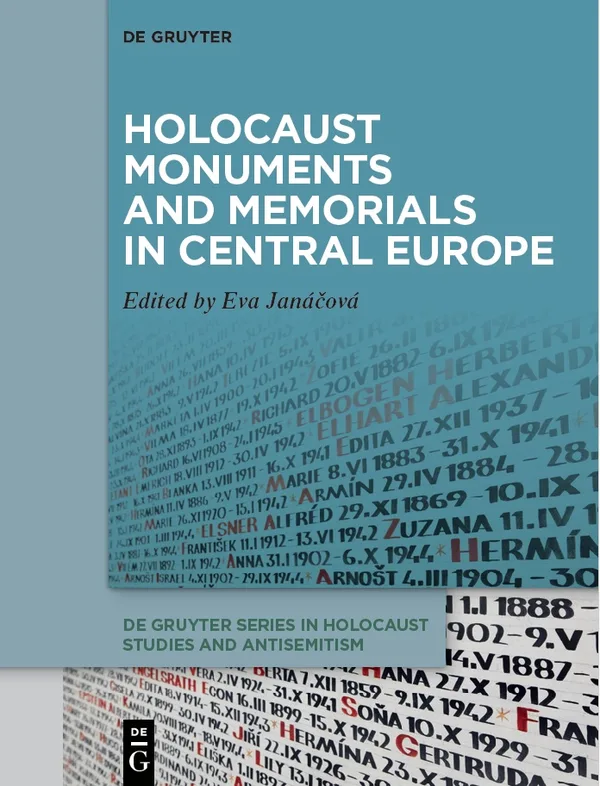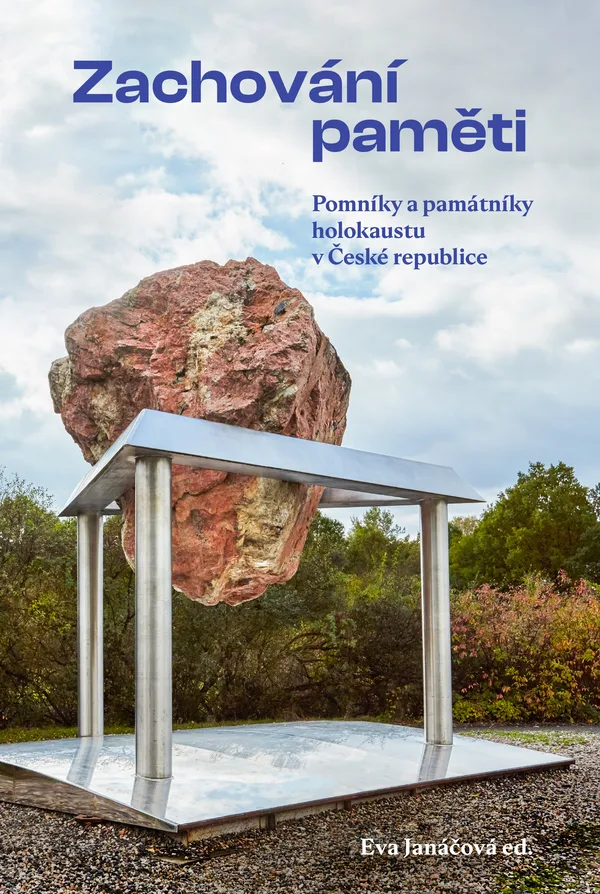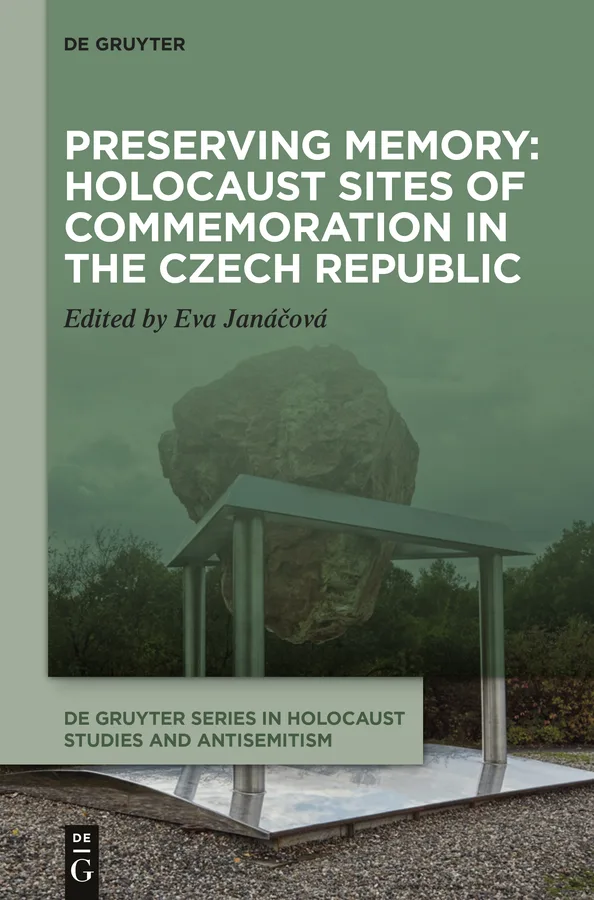
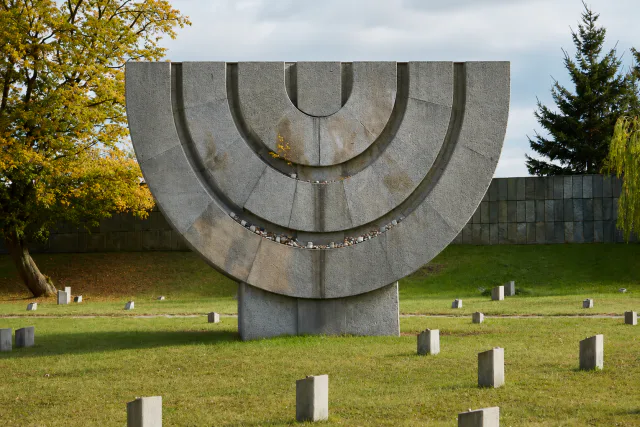
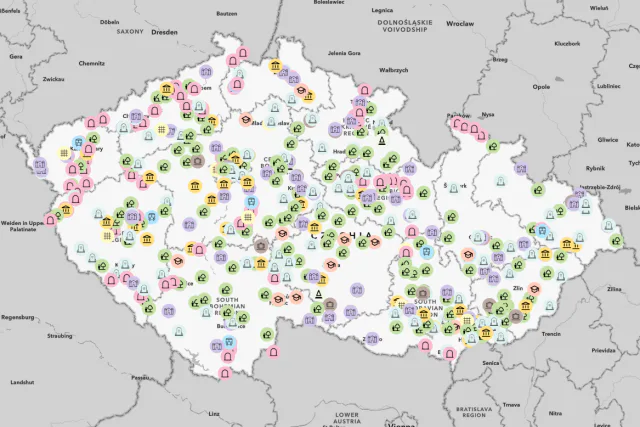
A unique database and specialized map systematically document Holocaust monuments and memorials located throughout the Czech Republic. Available in both Czech and English, the project provides detailed information on more than 600 sites. Beyond documenting their visual characteristics, it explores the changing identities of minority communities and their influence on memorial culture, while placing these monuments within the broader context of the individual, collective, and cultural memory of the Holocaust and its material expression in commemorative works. This is the first database in the Czech Republic to provide a comprehensive treatment of this subject. The specialized map of Holocaust monuments and memorials is pioneering even in an international context.
The database and map document collective Holocaust monuments and memorials, defined as sites commemorating Jews or Roma as a collective, a group, a section of the population, or a larger family unit (consisting of at least four different surnames) who became victims of Nazi persecution, or sites dedicated to a group of survivors of at least equal size or its rescuers. This definition also includes sites dedicated to the victims of fascism, Nazism, World War II, or the occupation, because – in terms of selecting the sites under study – the identity of the Holocaust victims being commemorated is decisive for us, rather than any accompanying inscriptions. We also take into account the perspectives of survivors and descendants of victims, who regard these particular sites as Holocaust monuments and memorials because they commemorate their relatives and friends.
The documentation of these monuments was based on extensive fieldwork and archival research conducted primarily by specialists from the Institute of Art History of the Czech Academy of Sciences and the National Heritage Institute, together with numerous other experts. The specialized map was developed in collaboration with cartographers from the Czech Technical University in Prague.
The database reflects the testimonies of a wide range of individuals, including Holocaust survivors, descendants of victims, sculptors, architects, municipal officials, politicians, and civic activists who possessed knowledge of the history and significance of individual monuments and memorials. Archival research produced numerous new findings, both concerning the most prominent sites and those that had previously received little attention. The project also draws on scholarly literature as well as newspaper and online articles. An important function of both the database and the map is the documentation of Holocaust monuments and memorials through new original photographs. The image archive collects and preserves digital copies of historical photographs, plans, sketches, and other related documents.
The result is a unique, systematically structured dataset organized through metadata that enables efficient searching, quantitative analysis, and compatibility with the databases of international partners. The database and map allow users to filter records according to commemorated victim groups, authors of the monuments, iconographic motifs, or geographical and chronological criteria. While the specialized map serves potential visitors to Holocaust monuments and memorials, it also fulfils an important scholarly function by facilitating the study of these sites within their spatial context.
The concept of the database builds on the international project Holocaust Memorial Monuments, developed by the Center for Jewish Art at the Hebrew University of Jerusalem and the Miller Center and Feldenkreis Program at the University of Miami. Collaboration with these institutions was established during the preparation and implementation of the present project.
The database and map were created within the framework of the project, Preserving Memory: Post-war Reflection on the Holocaust in Monuments and Fine Arts, No. DH23P03OVV014. The project aims to provide a scholarly assessment of Holocaust monuments and memorials in Bohemia, Moravia, and Silesia, as well as of the post-war reflection of the Holocaust in visual arts from the end of the World War II to the present day. These outputs were produced with the support of the NAKI III Programme (2023–2027) for Applied Research in the Field of National and Cultural Identity, funded by the Ministry of Culture of the Czech Republic.